Public communications is unlike molecular biology in many ways, but we’d like to suggest the most obvious difference is the level of linguistic complexity required.
If you want people to buy your Thing, what they want to know is how it will make their lives easier. If you’re asking them to support your Project, what they care about most is how nice they’ll feel for doing so. If you’re pitching an Idea, the line they’re waiting to hear is: “It will achieve X,Y, and maybe even Z.”
To borrow a concept from Axios,* your audience wants Smart Brevity.
*Not to give their often bland, oversimplified executivespeak too many flowers. But it is a great phrase ¯\_(ツ)_/¯
However, when many other organizations are selling similar Things or promoting the same kind of Project or advocating analogous Ideas for achieving a goal, there’s a temptation to make yours sound more sophisticated (and presumably impressive).
Chances are good that, at some point in your career, you’ve been on the receiving end of such a spiel. And if you’re like most people, it probably left you confused and annoyed.
On the other hand, you might also remember a time when someone (or some website, brochure, email, etc.) helped you understand a complex subject by explaining it in a direct, concise way that respected your intelligence.
Maybe your metaphorical lightbulb moment was accompanied by a sense of relief, or even gratitude. Such experiences are rare enough that people tend to remember them.
Which kind of proves our point about the nature of effective comms.
Because the last word is rarely the end of the conversation.
Much like penguins, we enjoy bringing you little gifts to show we care:
When a new Underwater Photographer of the Year gallery drops, you know it’ll get headline billing here. Cuddling seal pups, massive aquatic caves, sperm whales chasing sharks!
“1982: A day in a Parisian bistro” is just one of the many delights awaiting you in the INA Paris Vintage archive, a strong contender for YouTube’s most soothing rabbit hole.
The ImPact, a nonprofit that helps families make impact investments more effectively, is hiring a Communications Manager: fully remote, $85k-$100k a year.
Here’s what one of us is currently reading:
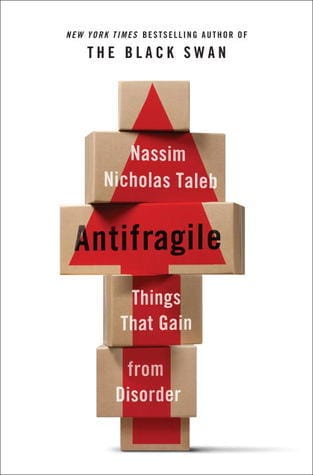
“When some systems are stuck in a dangerous impasse, randomness and only randomness can unlock them and set them free.”
Antifragile is not Taleb’s most recent book, nor his most celebrated. (If you also find his name familiar without being able to pinpoint why you know it, he’s the author of the 2007 bestseller The Black Swan).
But it was the most available on the Libby library app during a rainy Saturday last month, and the title sounded eerily appropriate for the current moment. Several hundred pages later, that suspicion was confirmed. Sometimes judging a book by its cover* pays off.
*Or the words on it, anyway.
Taleb’s main focus in Antifragile is examining what makes people and systems not just “resilient” to chaos, but strengthened by it. If you’re rolling your eyes—an understandable reaction for anyone who’s been conscious over the last several years—it might be a relief to learn Taleb is not making a pull-yourself-up-by-your-bootstraps argument. Instead, he’s offering genuinely useful (if impolitely phrased) insights that feel extra-relevant to surviving times like these.
It’s an excellent read if your usual bookly escapes aren’t offering the relief they usually do.

Public communications is unlike molecular biology in many ways, but we’d like to suggest the most obvious difference is the level of linguistic complexity required.
Not every organization has to acknowledge "these uncertain times." But if you're going to join that conversation, it's wise to offer people something more than empty therapyspeak.

Guessing about what the future holds is an amusing and low-risk pastime—most of the time, newspapers won’t write stories about you admitting you were wrong—but we still think it’s best to be realistic. We also believe it’s important to have a sense of humor about these things. Because have you seen the world out there? So, having established the parameters of “practical” and “fun,” here are the themes that (we hope) will define communications in 2026:
[The] forces that defined the past year—the AIfication of everything, the Trump Administration’s crusade to reshape the world, the ultra-personalized emptiness of digital life—still seem to have a head of steam. When they’ll run out is anyone’s guess. So here’s a prediction for the new year: people are going to start valuing a human touch a lot more.

If the 2010s were an era of diversity in media, the 2020s are one of consolidation. This presents obvious challenges when trying to get small or medium organizations mentioned in the news. Success depends on riding the waves that already exist, instead of trying to make new ones.
Press releases sometimes feel like relics from a simpler, more innocent time. Much like fax machines, most people are aware they continue to exist. What’s less clear: who actually uses these things in 2025? And for what purpose?

The ability to not sound like you were just lobotomized by a team of nonprofit execs with MBAs has become a way to stand out. It's “riskier” in a sense, because it’s easier for people to tell what you’re actually saying—and potentially criticize it. On the other hand, nobody’s listening to the jargon jockeys anymore.

When we founded this agency last year, we had a pretty straightforward idea of how we’d run our business: do good work with our own hands, communicate honestly, and treat people fairly. We thought this would be the simplest path to earn a decent living and contribute something to human society. After a year of this experiment, here’s what we’ve found...

Working with people you think are interesting is good for your own personal and career growth. If their ideas are good enough to work on for free, someone will eventually pay them for that, and you’ll have forged a professional relationship—or better, a friendship—with someone smart.

There’s nothing wrong with media outlets exploring new revenue streams, and newsrooms are always fluctuating in size. But outlets can only hollow out their core product so much before it collapses entirely, and a growing number of media organizations seem to be reaching that point now. Live events are not going to save them.
Comms agencies that are good at their work tend to be curious and resourceful. We can’t pretend to be ignorant about the people and products we’re telling the public to trust. In all but the rarest cases, the agency knows what it wants to know. Business is never as pure or idealistic as we might want it to be. It does have ethical boundaries, though, and these are especially important at inflection points like the one we’re in now.
We humans like to explore for exploring’s sake. We’re pleased when we find an unexpected beautiful thing, and we feel a sense of satisfaction when we “discover” something that’s not immediately obvious to the casual observer. People want to spend time in environments where these opportunities are available—which is something to consider when building (or updating) your website.
Nonprofits shouldn't have to beg for funding to provide vital services. But with federal funding suddenly scarce—and thousands of organizations scrambling to attract attention from the big donors that remain—a new kind of comms strategy is needed.

The platform doesn't drive traffic to your site. The ads don't convert. And these days most of the "engagement" comes from spam bots or virulent bigots. It's time to move on from Twitter—but to where?
Everybody loves talking about the importance of "storytelling" for building your organization's name recognition. And it really can work—but it requires more planning and effort than firing off the occasional blog post or Instagram post.

If your nonprofit or small business has a clear message to share about a concrete goal it wants to achieve, video can do that better than any other medium—if it's done right.

Today, even a glowing review in the New York Times doesn't move the needle that much. Getting people's attention takes a more creative approach. And it all hinges around owning the means of (content) production.

In the inaugural issue of A Better Way to Say That, we explore important questions like why does this newsletter exist? and why does PSE exist, for that matter? We also share a roundup of exciting new book launches, events, and job postings—along with perhaps the most effective fundraising email ever written. As far as business-y newsletters go, it's a fun read!