Everyone knows the internet is becoming clogged with ugly, useless junk. “Over 50 percent of the internet is now AI slop,” according to a report from a full year ago. It’s reasonable to deduce that by now an even greater number of websites are untrustworthy and unenjoyable.
Even The Atlantic admits that it’s increasingly hard to argue with proponents of dead internet theory.
Yet rumors of the web’s demise are– well, maybe not greatly exaggerated. But there’s still some good stuff out there! And since most people aren’t ready to log off for good just yet, the nooks and crannies of the internet that remain pleasant to visit are reaping the traffic (as well as the reputational and/or revenue benefits that entails).
After all, nostalgia is a hell of a drug. Bose didn’t decide to start making wired headphones again because their product designers love cables— they did it because teenagers clamored for "obsolescence" too loudly to ignore. And while not all audiences are as vocal as 17 year old emo fans, meeting their softer-spoken yearnings for The Old Ways can be just as profitable.
Here are a few of PSE’s favorite digital Shangri-Las, with quick descriptions of why they continue to thrive in these deeply stupid times:
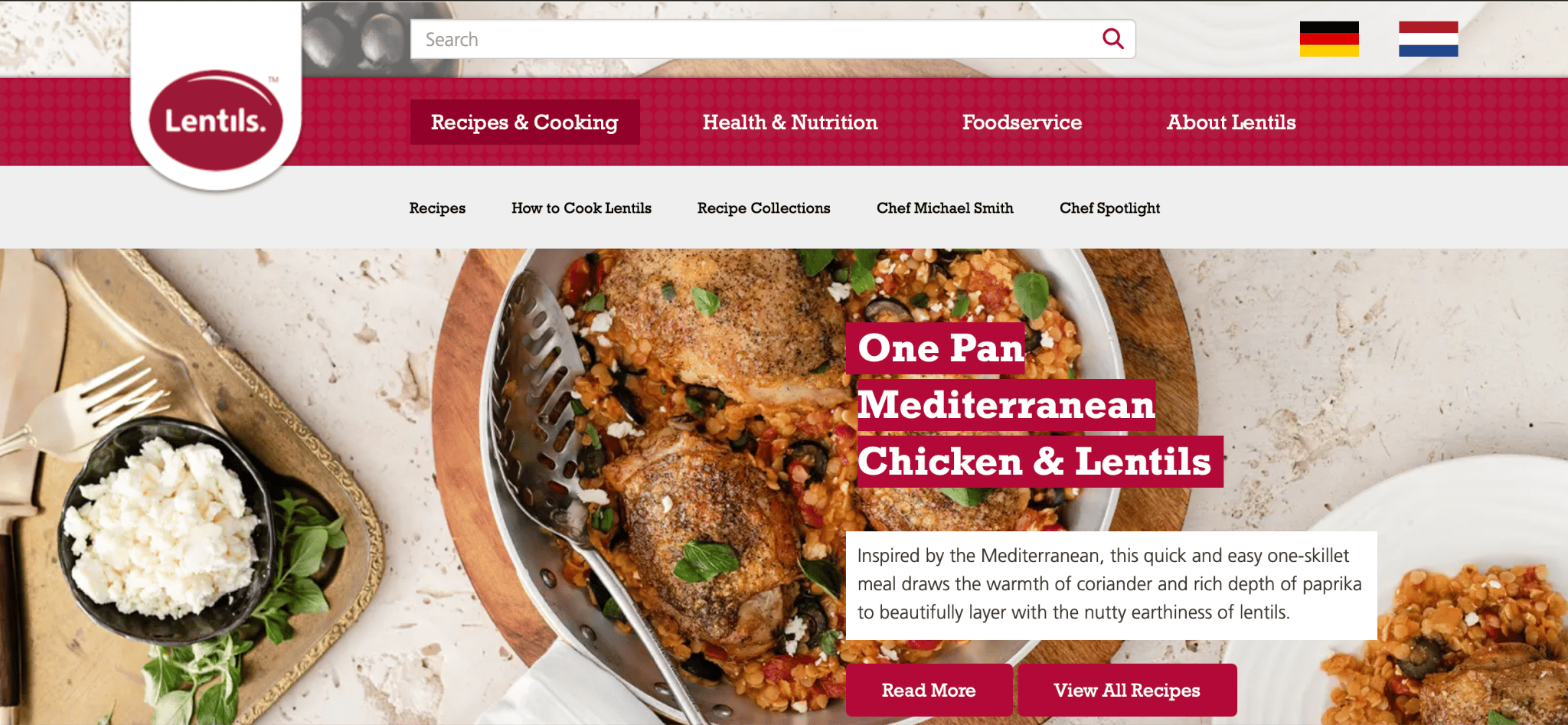
Complaining about cooking sites’ bloated SEO-oriented intros is very 2016. However, that complaint continues to be very relevant as well. Throw in the preponderance of AI slop images—to say nothing of the literal recipes—and finding something to cook for dinner now feels more fraught than fun.
But if you share our enthusiasm for beans and bean accessories, the Saskatchewan Pulse Growers (SPG) have done you a great service with Lentils.org. Delicious, easy-to-follow recipes of varying cuisines and complexities make the site a godsend for lentil lovers of all stripes.
The pictures are real, the final products are edible, and each recipe is mercifully free of back story. What more could you want from a cooking site? We wish the 17,000 farmers of the SPG success in their mission to “Nourish the World Through Profitable Pulse Production.”
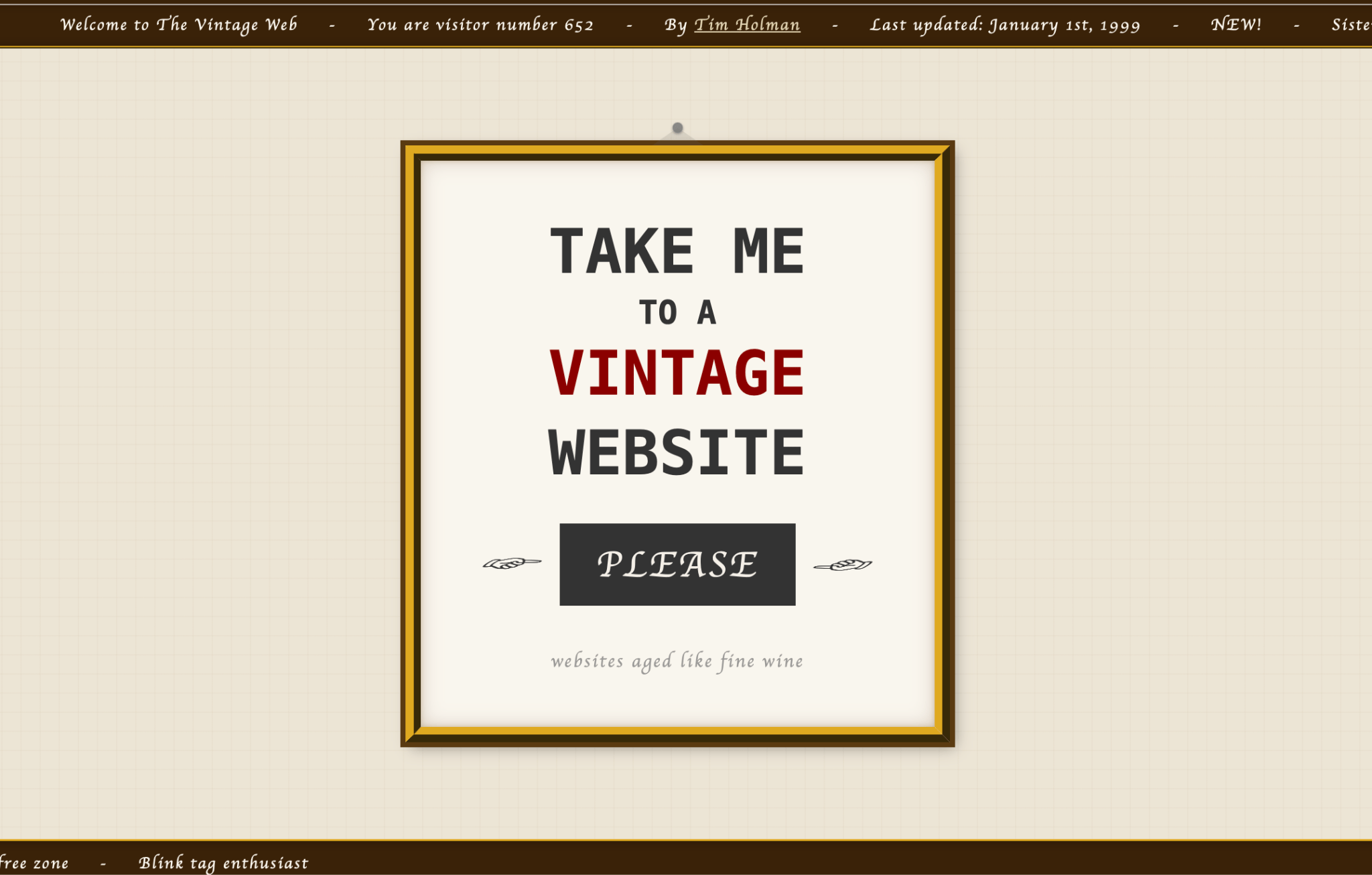
If your website only has one clickable button*, it better do something cool every time your visitors click it. And boy does The Vintage Web deliver!
An early 90s UFO conspiracy site! The world’s oldest webcam, San Francisco FogCam! A tutorial on making Strawberry Pop-Tart Blow-Torches! These are just the first three destinations we encountered on our trip down this rabbit hole.
We will be clicking that button many more times in the future.
*Technically the site has, like, five or six links if you include the ones in its rapidly scrolling header and footer? But you have to work to spot them—though if you’re as delighted by The Vintage Web as we are, you’ll be motivated to make that effort. Brilliant psychological design work by creator Tim Holman**.
**Yes, his personal site is one of those links.


A YouTube video of a grizzled Gallic troubadour reduced to tears by a choir of kids with fake beards sipping fake whisky and smoking fake cigarettes as they serenade him with one of his greatest hits is not monetizable in the traditional sense.
However, the imagery is so poignant and memorable (also kind of funny?) that it makes people feel something when they see it. And wherever your funnel may lead, making people feel something is key to luring them into it.
Throwback YouTube is full of incredible material—in the form of stills, clips, or entire videos—to use when you want to earn some cachet as a person or organization of interesting tastes. Sometimes the soft sell leads to the biggest payoff.
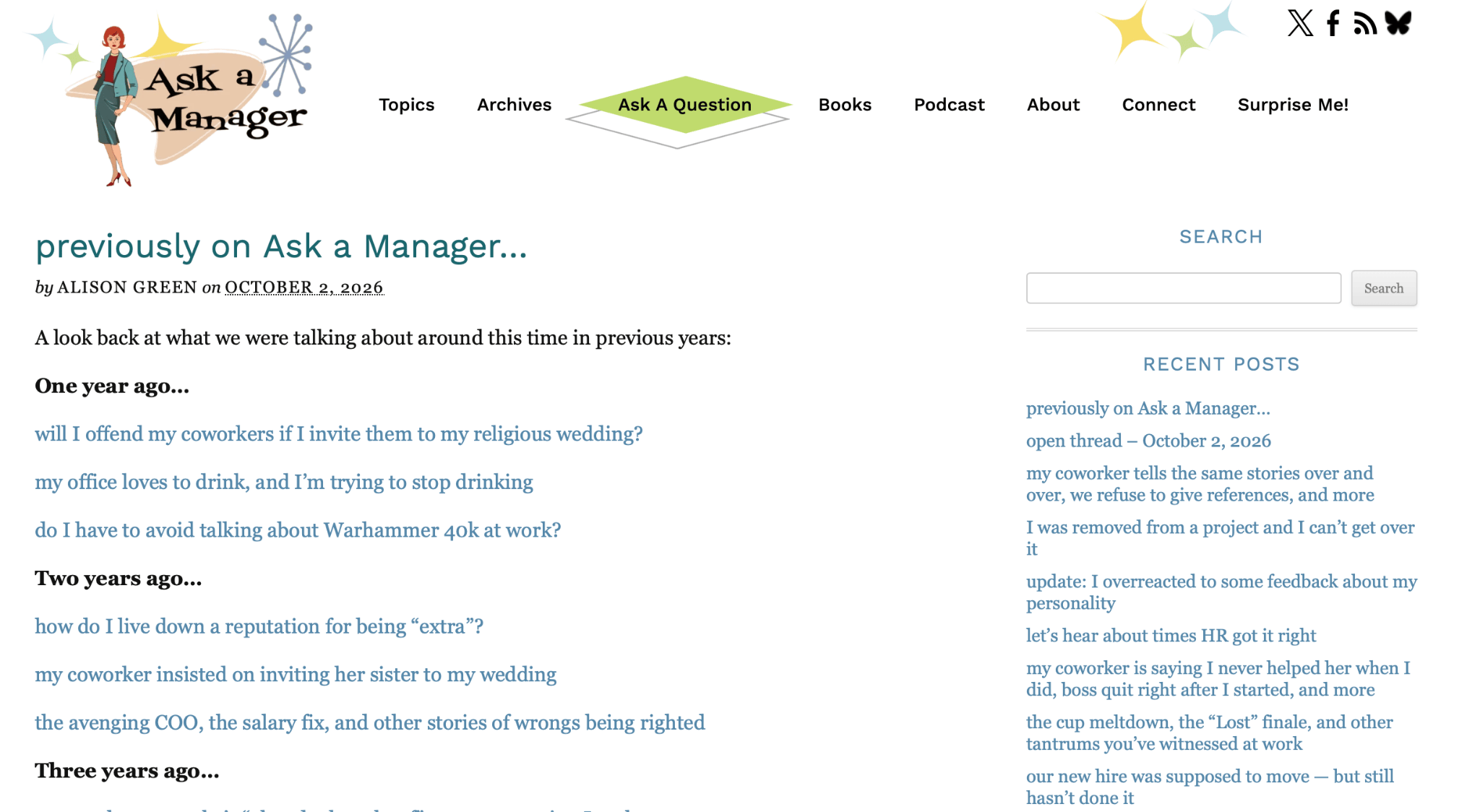
Holding down an old-school blog, with regular updates, for 15+ years? Count us in.
In addition to providing genuinely useful information in the form of reader-submitted advice Q&A’s, writer and work expert Alison Green runs a tightly-moderated comment section full of kind and useful contributors, as well as regular ask-the-reader and open-comment posts.
If you haven’t glanced through the archives, prepare for a time-machine of U.S. work culture from the Great Recession on. Every time we cue up askamanager.org, now burned into our browser history, we go back to an age-old question: why don’t more people just have normal blogs?
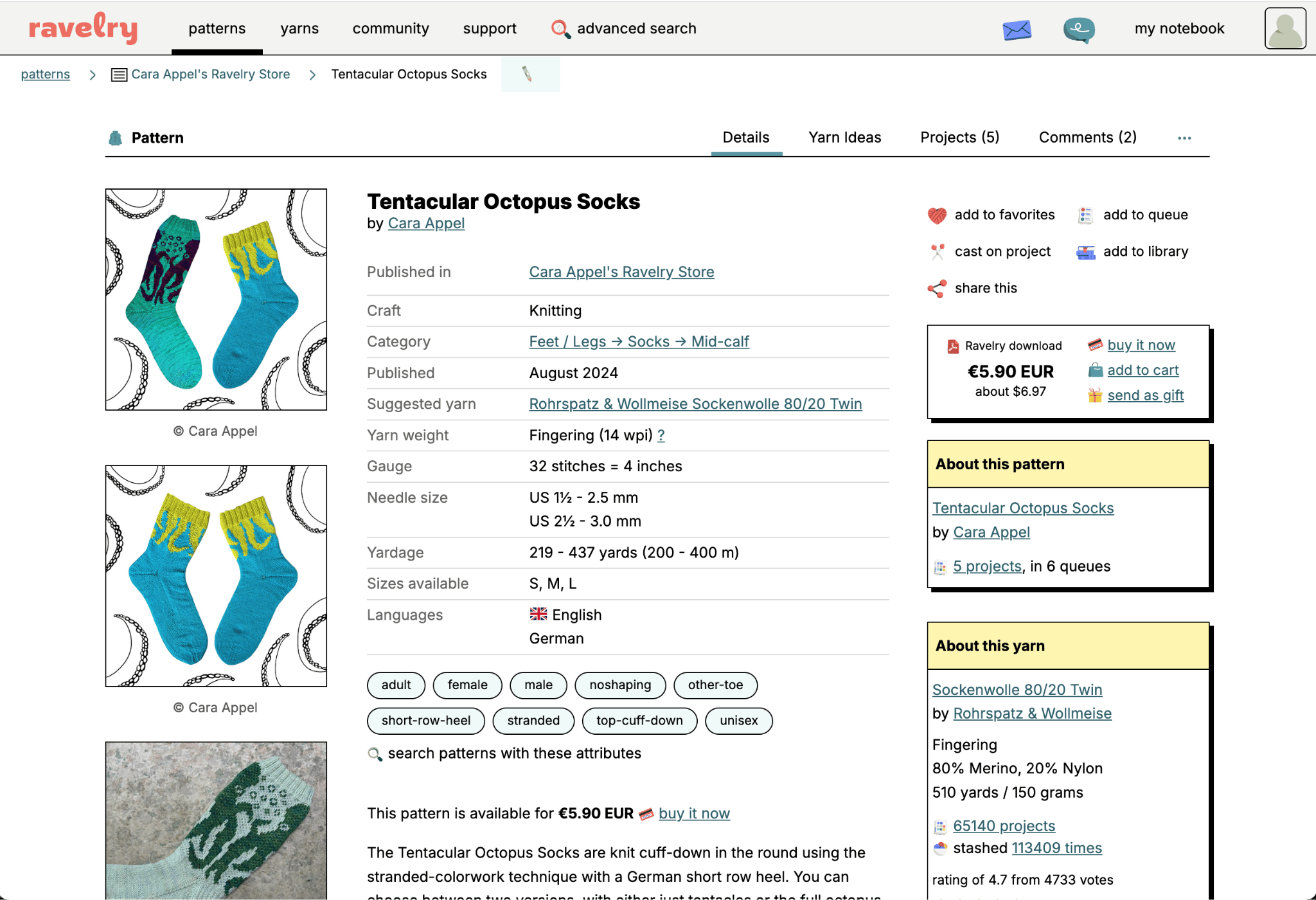
This one is for the knitters, crocheters, and other fine fiber folks. Etsy and Pinterest have become a trash heap of AI content and scammers, ready to sell you incoherent ChatGPT-generated or just plain stolen patterns for elevated prices.
But Ravelry is still good, and even getting better with age. The site-runners ruthlessly remove any content that doesn’t pass the gen-AI smell test, provide traditional forums for all types of crafty topics, and make it easy to find thousands of patterns and actually, easily, pay creators from all over the world for their hard work.
A search function that actually works? We didn’t think we’d be so impressed by the basics in 2026, but, here we are.
Because the last word is rarely the end of the conversation.
Much like penguins, we enjoy bringing you little gifts to show we care:
Apparently the average person—and by extension, reader of this newsletter—goes more than three weeks between washing towels and bedsheets. How do you do it?!?!
Another WIRED masterpiece this month: come for the incredible Animorph-style art of a psychedelic tech bro transforming into a giant slug, stay for its cathartic investigation into why nobody wants to date those guys anymore.
Be the change you want to see in the world: Movement Labs, which claims to operate “the largest evidence-based political texting programs in the country,” is hiring a new Managing Director: fully remote, $200k-$250k a year. Maybe you could change them!
Here’s what one of us is currently reading:
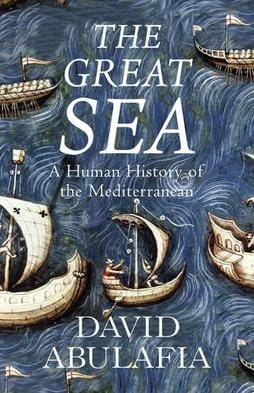
“When the Genoese leaders divided up their loots [after the siege of an Arabic coastal city following the First Crusade], they gave each sailor two pounds of pepper…. They also carried away a large green bowl that had been hanging in the Great Mosque of Caesarea, convinced that it was the bowl used at the Last Supper and that it was made of emerald (a mistake rectified several centuries later when someone dropped it, and it was found to be made of glass).”
When PSE first learned of the existence of this book, our reaction evoked Barney Gumble’s immortal expression of enthusiasm upon receiving an unexpected bounty. If you enjoy 1) stories involving the peoples of the Mediterranean, and/or 2) tales about the sea, and/or 3) sprawling regional histories, you might feel the same.
The Great Sea covers an immense amount of literal and metaphorical territory, from (before) the Bronze Age to modern times, and from the Strait of Gibraltar to the Bosphorus Strait. The late David Abulafia, who was Professor Emeritus of Mediterranean History at Cambridge, had to leave out much more than he kept in the final draft. But what made the cut is still a fine piece of storytelling.
Abulafia plays the hits you’d expect, with detailed passages on the rise and fall of the Greeks and Romans. The most interesting parts of the book, though, focus on influential-but-lesser known cultures, such as the Carthaginians and Catalans. Equally illuminating is his emphasis on the role of the physical world—from winds to ocean currents, and saltpans to goldmines—in shaping the human history of the world’s most famous sea.
If you’ve ever travelled to a place in the Mediterranean and thought, “Huh, this reminds me of [another place in the Mediterranean you visited before],” The Great Sea will confirm many of your hunches. It will also confute some popular assumptions you may have absorbed about the development of Western culture.