24 thoughts on communicating better, for our 24th newsletter
August 4, 2026
Like many of you, we were aware “the dog days of summer” referred to a stretch of the season when life moves at a languid pace. However, it was only recently while perusing The Old Farmer’s Almanac that we learned the term’s actual dates (July 3-August 11) and meaning (which is much more astrological than we’d imagined).
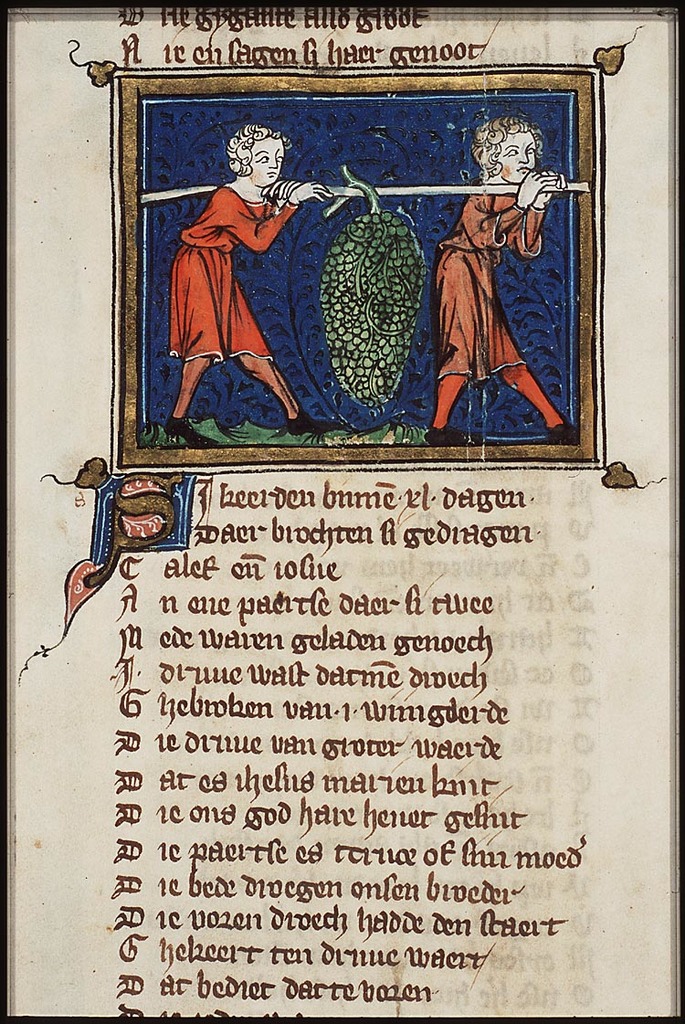
The end of summer’s dog days lines up, more or less, with the two-year anniversary of A Better Way to Say That. To celebrate—a nicer motivation than “to fill space”—we’d like to share 24 observations, ideas, opinions, and other thought-varieties that have been on our mind grapes since we started sending you this newsletter 24 months ago.
Despite the endless flood of infatuations with “new” platforms (reddit!) and tactics (spamming it!), the carcinisation of online communications tends to lead organizations back to the most stable, ownable properties on the internet: websites and newsletters.
Many thought leaders will encourage their audiences to forget this lesson as soon as a shiny new… something… is developed, especially if it can be powered by AI.
However, target demographics are often less homogenous and predictable than they look on a demo slide.
That’s a delightful surprise when it works in your favor, and a humbling one when it goes the other way. Almosteveryone still likes funny animals, though.
Other things with very high approval ratings: using Zoom for video meetings; cancelling a scheduled Zoom when it’s not actually necessary; doing an impromptu Zoom for time-sensitive issues that require a lot of back-and-forth.
Google Calendar invites are also a 21st century miracle.
Much less miraculous: almost every other software update Google has made in the past year. Also applies to Canva, Slack, [name your workhorse software], etc.
When in design doubt, you’ll never go too wrong with some nice bento boxes*.
*Showing tangible examples of what you’re talking about is almost always more effective than a verbal description.
It’s usually faster, too.
People really appreciate when you respect their time.
However, not everything has to be optimized for speed and efficiency (a famously fungible concept)—like a bowl of spaghetti, some things are best savored slow and messy.
Presentation slides aren’t one of those things;the 5-5-5 rule exists for a reason.
The rule of threes, on the other hand, has become overused.
So have many emojis, but it just doesn’t matter that much for most organizations’ social media posts. It’s fine to drop an occasional 😂; you’re a mid-sized nonprofit, not the president of the Cool Kids Table. Anyway, your audience is old, too.
The only thing more annoying than getting old is having to hear how it’s OK to do it, or why you’re doing it wrong, or what products and life hacks could make it easier, or [insert tired digital content type here].
We do love a good roundtable though, don’t we folks? (Or a well-done, just-long-enough listicle, if we’re being honest).
Our tastes are rarely as cultivated, or salt-of-the-earth folksy, as we’d like to admit.
Whatever people’s personal Overton Windows of taste might be, the most useful territory for comms tends to be on the margins. That’s what gets noticed and remembered, and these are the two things that matter most.
Being funny (or at least witty) helps with this.
In some cases, it also matters just as much—maybe even more!—than providing the practical, actionable information-fodder that comms teams are accustomed to producing. Because human audiences can tell when they’re being led to water and told to drink, which backfires a lot in our irascible times.
Audiences do like well-defined paths and a non-sprawling/mentally exhausting array of options, they just want you to be subtle about it.
Humans: what weird, fickle, marvelous creatures!
Oh, and one more thing…
Because the last word is rarely the end of the conversation.
“It’s not just you, ____ really is _____” is one of the internet’s top-performing content genres, and few are doing it better than Keyana Sapp of Worse On Purpose (check out this piece on cookware).
Speaking of sanity-affirming toothgrinders, we’d love to know the engagement stats on Popular Science’s investigation of airplane seat sizes since the 1980s.
The Summer of Ludd is making it very clear that the tech-skeptic crowd is having more fun—and PR success—than the industry’s boosters.
Pebbles of the month
Much like penguins, we enjoy bringing you little gifts to show we care:
It’s a high bar, but Andy Serkis’ animated adaptation of George Orwell’s Animal Farmbeing a sappy, unwatchable mess is the most 2026 thing to happen in the film world.
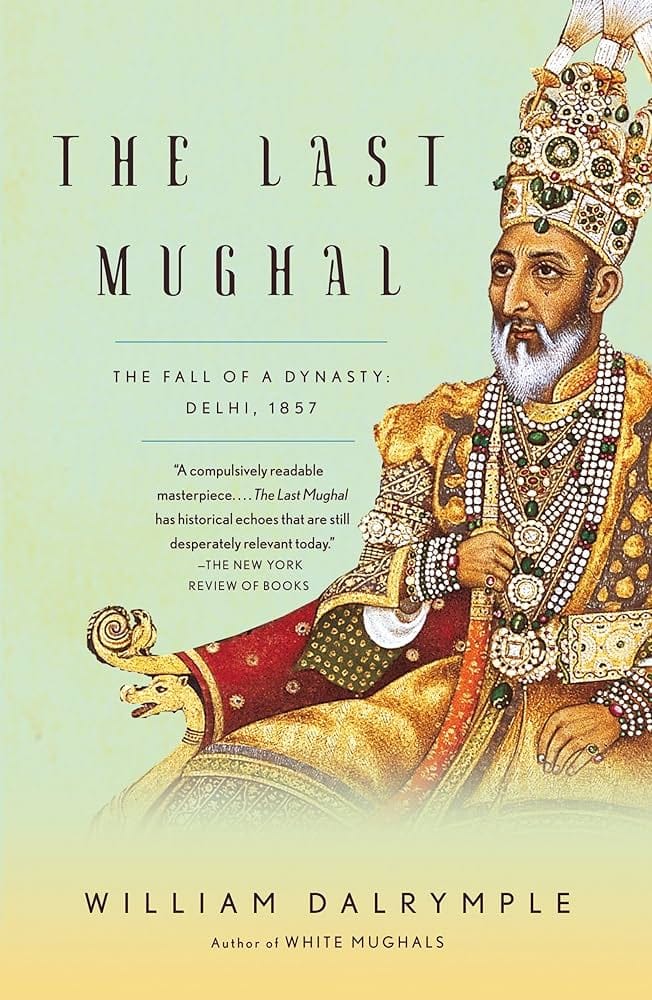
“The Last Emperor appears as a benign old man with impeccable manners—even when treated with extreme rudeness by the British. Daily he has olive oil rubbed into his feet to soothe his aches; occasionally he rouses himself to visit a garden, go on a hunting expedition, or host a mushaira. Evenings were spent ‘enjoying the moonlight,’ listening to singers or eating fresh mangoes. All the while the aged Emperor tries to contain the infidelities of his young concubines, one of whom becomes pregnant by the most distinguished of the court musicians.”
Hot Dalrymple Summer continues with another gorgeous portrait of colonial-era India that offers perhaps the most desirable quality one could seek in a book right now: total absorption. Few creative works are capable of completely eclipsing the outside world for hours at a time, but the Scottish historian/Mehrauli goat farmer really outdid himself with this accessible-yet-intellectually engrossing masterpiece.
This time Dalrymple's subject matter is the Great Mutiny of 1857, in which hundreds of thousands of Indian sepoys rose in bloody rebellion against British colonial rule. Switching deftly between the POVs of a dazzling cast of characters—from the titular Last Mughal, the Emperor Bahadur Shah Zafar II, to the murderous British general and cult figure John Nicholson, to the plucky photographer-turned-refugee Harriet Tytler, to the once-rakish-and-subsequently-distraught poet Ghalib—the book draws on an outrageously rich set of Urdu, Persian, and English sources to illustrate one of the early modern era’s defining cataclysms.
All of that’s great, but sprawling, well-sourced histories aren’t exactly rare. What makes The Last Mughal so special is Dalrymple's execution: the beautiful prose that somehow makes words on a page seem audible, the brisk sequencing that never feels rushed, the ever-present wittiness that keeps even the heaviest passages from becoming a slog. Escapism has rarely felt so responsible.
A newsletter about how people are communicating today, for better or worse
Newsletter Sign Up
Thank you! Your submission has been received!
Oops! Something went wrong while submitting the form.
Comms agencies that are good at their work tend to be curious and resourceful. We can’t pretend to be ignorant about the people and products we’re telling the public to trust. In all but the rarest cases, the agency knows what it wants to know. Business is never as pure or idealistic as we might want it to be. It does have ethical boundaries, though, and these are especially important at inflection points like the one we’re in now.
Getting in front of people’s eyeballs demands technical aptitude, like an understanding of algorithms and optimizations. But arriving at that point is only half the battle. Anyone who’s ever scrolled past a row of uninspiring Netflix offerings knows that the bar for an actual click—i.e. a sale, donation, or any type of action—is much higher. This is where it can pay to get Business Weird...
Today, even a glowing review in the New York Times doesn't move the needle that much. Getting people's attention takes a more creative approach. And it all hinges around owning the means of (content) production.